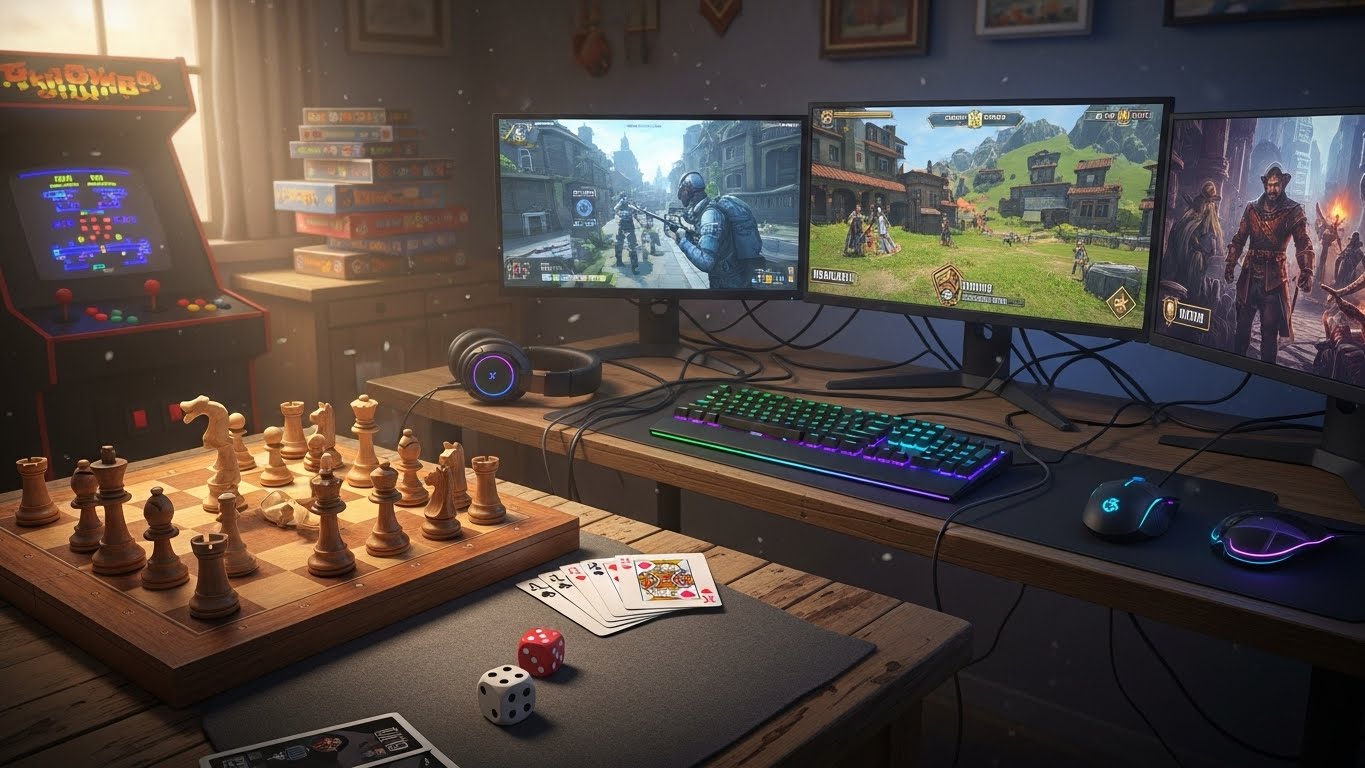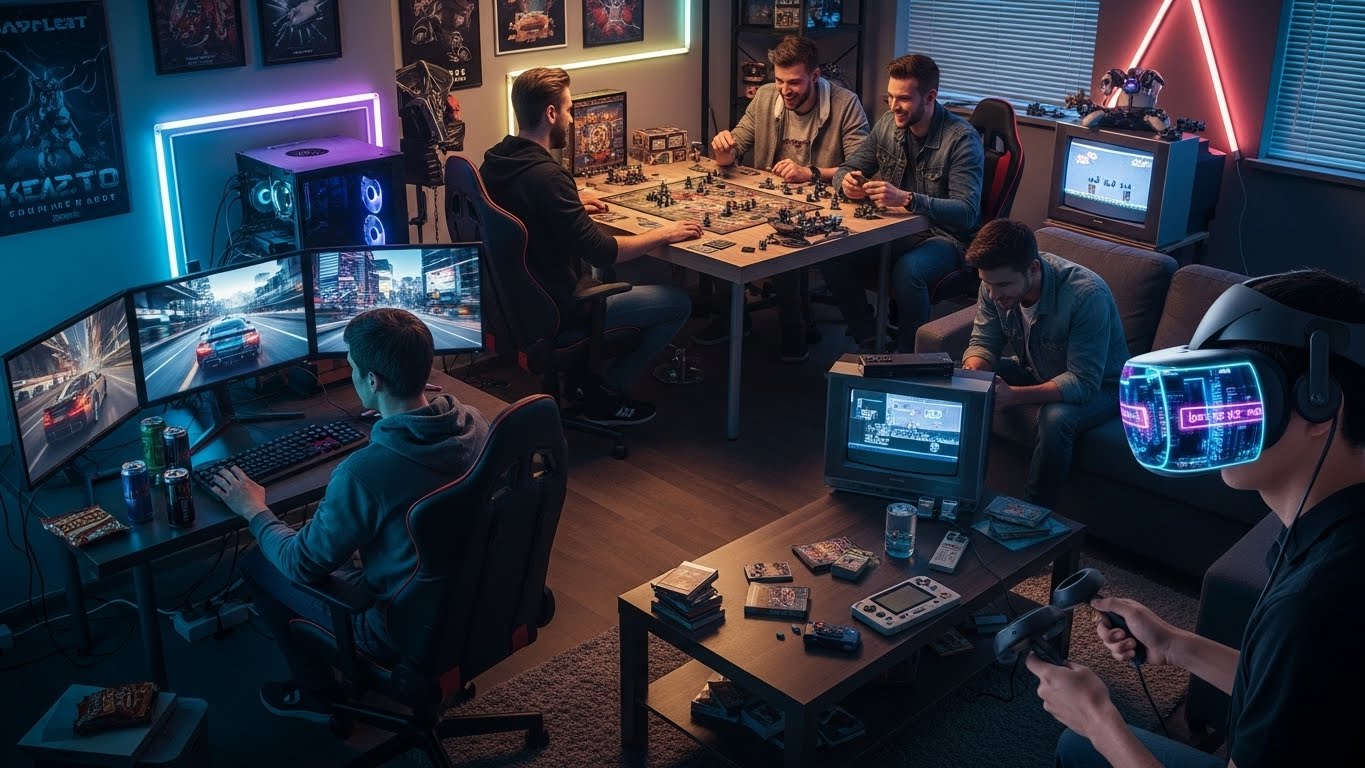

Gaming has come a long way since the first arcade machines and early home consoles. What began as a simple form of entertainment with games like Pong and Space Invaders has evolved into a multi-billion-dollar industry, providing people around the world with hours of entertainment. Today, gaming spans various genres and platforms, offering rich, immersive experiences that continue to captivate players of all ages.
In this blog post, we will explore the history, evolution, and future of gaming, from the early days of pixelated graphics to the highly detailed, open-world games of today. Whether you are a casual gamer or a seasoned veteran, this journey through the world of gaming will highlight key milestones, technological advancements, and trends that have shaped this vibrant industry.
The Early Days of Gaming: The Birth of a New Industry
The origins of gaming can be traced back to the late 1950s and early 1960s when the first computer games were developed for academic and research purposes. One of the earliest examples of interactive entertainment was the game Tennis for Two, created in 1958 by physicist William Higinbotham. It was a simple tennis simulation displayed on an oscilloscope, and while it was rudimentary by today’s standards, it marked the beginning of the relationship between computers and entertainment.
In 1972, Pong was released by Atari, and this was arguably the first commercially successful arcade game. The game’s simple premise—two paddles and a ball—was inspired by tennis, and its addictive nature made it a hit in arcades around the world. Pong’s success helped to establish video games as a legitimate form of entertainment.
As the 1970s progressed, the arcade gaming scene exploded. Games like Space Invaders, Asteroids, and Pac-Man dominated arcades and became cultural icons. These games introduced new gameplay mechanics, sound effects, and graphics that made gaming more engaging and appealing to a broader audience.
The Rise of Home Consoles: Making Gaming Accessible to Everyone
While arcade gaming flourished in the 1970s and early 1980s, the true breakthrough for home gaming came with the introduction of home video game consoles. In 1977, Atari released the Atari 2600, one of the first successful home gaming systems. It allowed players to enjoy arcade-style games at home, and with the release of cartridges, it made gaming more versatile and customizable.
Throughout the 1980s, the home console market continued to grow. Companies like Nintendo, Sega, and Sony became major players in the industry. Nintendo’s NES (Nintendo Entertainment System), released in 1985, revolutionized the home gaming market. Classic games like Super Mario Bros. and The Legend of Zelda helped establish Nintendo as the dominant force in gaming.
This era also saw the rise of iconic franchises that continue to be popular today. Super Mario, Metroid, Mega Man, and Castlevania became household names, and the games’ characters and worlds remain beloved to this day.
The 3D Revolution: Entering the World of Virtual Reality
The early days of gaming were marked by simple, 2D graphics. However, the 1990s ushered in a new era of gaming with the introduction of 3D graphics. In 1991, Sega released the Sega Genesis, which featured improved graphics and sound capabilities, while Sony’s PlayStation launched in 1994, bringing polygonal 3D graphics into the gaming mainstream.
One of the most significant games to demonstrate the power of 3D technology was Super Mario 64, released in 1996 for the Nintendo 64. The game introduced players to a fully 3D world with expansive environments and a completely new level of freedom in movement. The game’s groundbreaking design and controls set the standard for 3D platformers, and it is still regarded as one of the greatest video games of all time.
At the same time, first-person shooters (FPS) like Doom and Quake helped to popularize 3D environments in the realm of action games. These games introduced immersive, fast-paced action in fully 3D environments and laid the groundwork for future FPS titles, such as Half-Life and Halo.
The 1990s also saw the emergence of virtual reality (VR) gaming. Though VR technology was still in its infancy, games like Virtual Boy for the Nintendo platform and Dactyl Nightmare for arcade machines showcased early attempts at bringing virtual worlds to life. Although VR wasn’t fully realized at the time, it set the stage for the immersive experiences that would come in the future.
The Online Gaming Boom: Connecting Players Across the Globe
As technology advanced into the early 2000s, the internet began to play an increasingly important role in the world of gaming. The introduction of broadband internet allowed players to connect to one another online, leading to the rise of multiplayer online games.
One of the first games to take advantage of online play was StarCraft (1998), which became a massive hit and helped establish online gaming as a viable and competitive platform. Games like Warcraft III and Diablo II further solidified the appeal of online play, allowing players to connect with others in real-time for cooperative and competitive gaming experiences.
The first-person shooter genre was also transformed with the advent of online multiplayer gaming. Halo 2 (2004) introduced players to Xbox Live, an online service that allowed Xbox players to compete in massive, multiplayer matches. This laid the foundation for online gaming as we know it today.
The rise of Massively Multiplayer Online Role-Playing Games (MMORPGs) like World of Warcraft (2004) further expanded the scope of online gaming. These games allowed players to immerse themselves in vast, persistent virtual worlds, where they could interact with thousands of other players in real-time. World of Warcraft became a cultural phenomenon, with millions of players around the world participating in epic quests and battles.
In addition to traditional online multiplayer experiences, the 2000s saw the rise of mobile gaming. The release of smartphones and tablets opened up new opportunities for gaming on the go, and titles like Angry Birds and Candy Crush became global sensations. Mobile games have since become a multi-billion-dollar industry, with casual and hyper-casual games attracting millions of players worldwide.
Modern Gaming: Open Worlds, Realistic Graphics, and New Experiences
In recent years, gaming has continued to evolve with more sophisticated graphics, complex storytelling, and innovative gameplay mechanics. The development of open-world games has given players the freedom to explore vast, detailed environments, complete quests at their own pace, and shape the outcome of the game’s story. Games like The Elder Scrolls V: Skyrim, Grand Theft Auto V, and The Witcher 3: Wild Hunt have set new standards for open-world experiences, offering rich, dynamic worlds that feel alive with possibilities.
The graphics in modern games are also far more advanced than ever before. Thanks to ray tracing technology and powerful gaming hardware, today’s games look incredibly realistic, with lifelike lighting, textures, and animations. Games like Red Dead Redemption 2 and The Last of Us Part II feature cinematic visuals that blur the line between gaming and film.
Moreover, virtual reality (VR) gaming has finally begun to live up to its early promises. Platforms like the Oculus Rift and PlayStation VR have made VR gaming accessible to a wider audience, and games like Beat Saber and Half-Life: Alyx have shown the potential for immersive, first-person experiences.
As cloud gaming continues to develop, players will no longer be limited by their hardware. Services like Google Stadia, Xbox Cloud Gaming, and NVIDIA GeForce Now allow gamers to play high-quality games on virtually any device with an internet connection, eliminating the need for powerful consoles or PCs.
The Future of Gaming: Beyond the Horizon
The future of gaming is an exciting prospect, with new technologies, game genres, and experiences on the horizon. As artificial intelligence (AI) and machine learning continue to improve, games are becoming more responsive to player choices, creating dynamic narratives and environments that change based on in-game decisions.
The rise of cloud gaming will likely make it easier than ever to access high-quality games, while augmented reality (AR) may lead to entirely new kinds of interactive experiences. As 5G technology becomes more widespread, the potential for seamless online multiplayer gaming and streaming will only continue to grow.
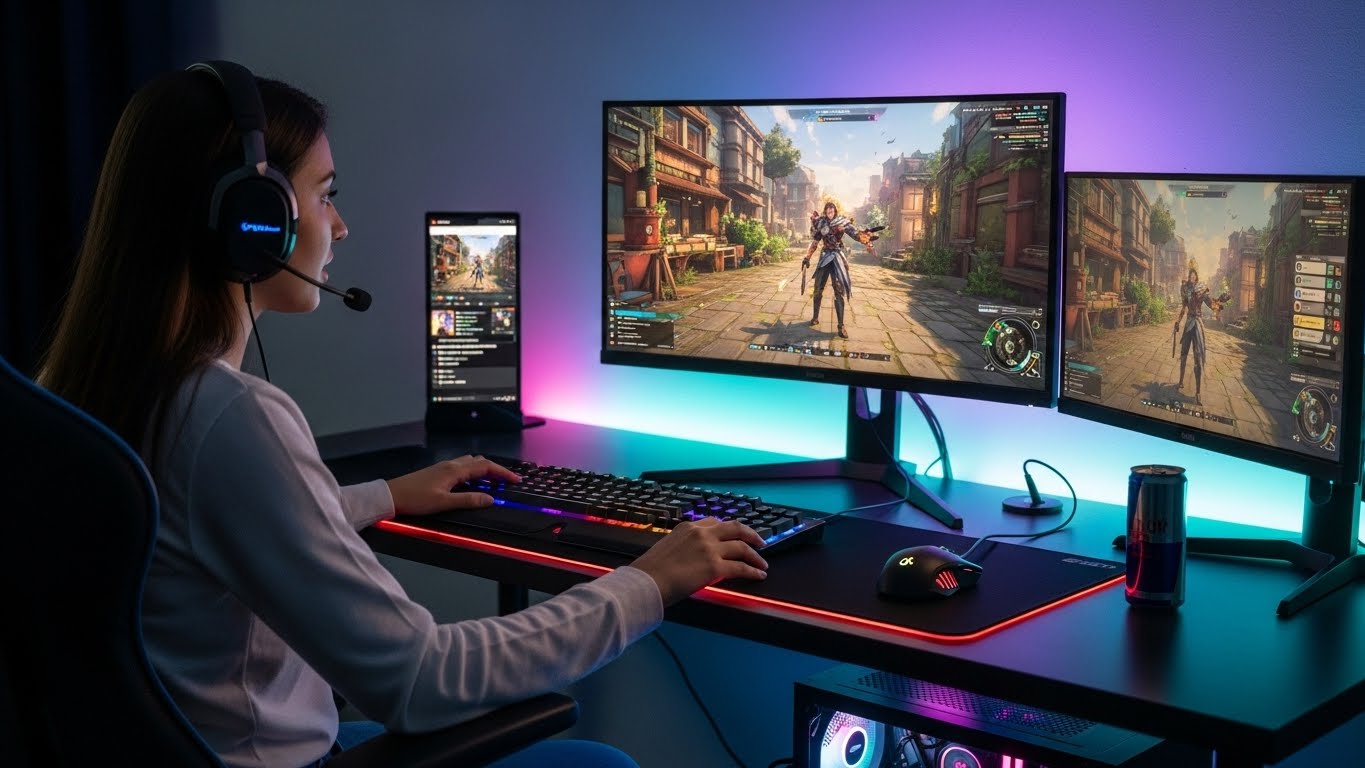
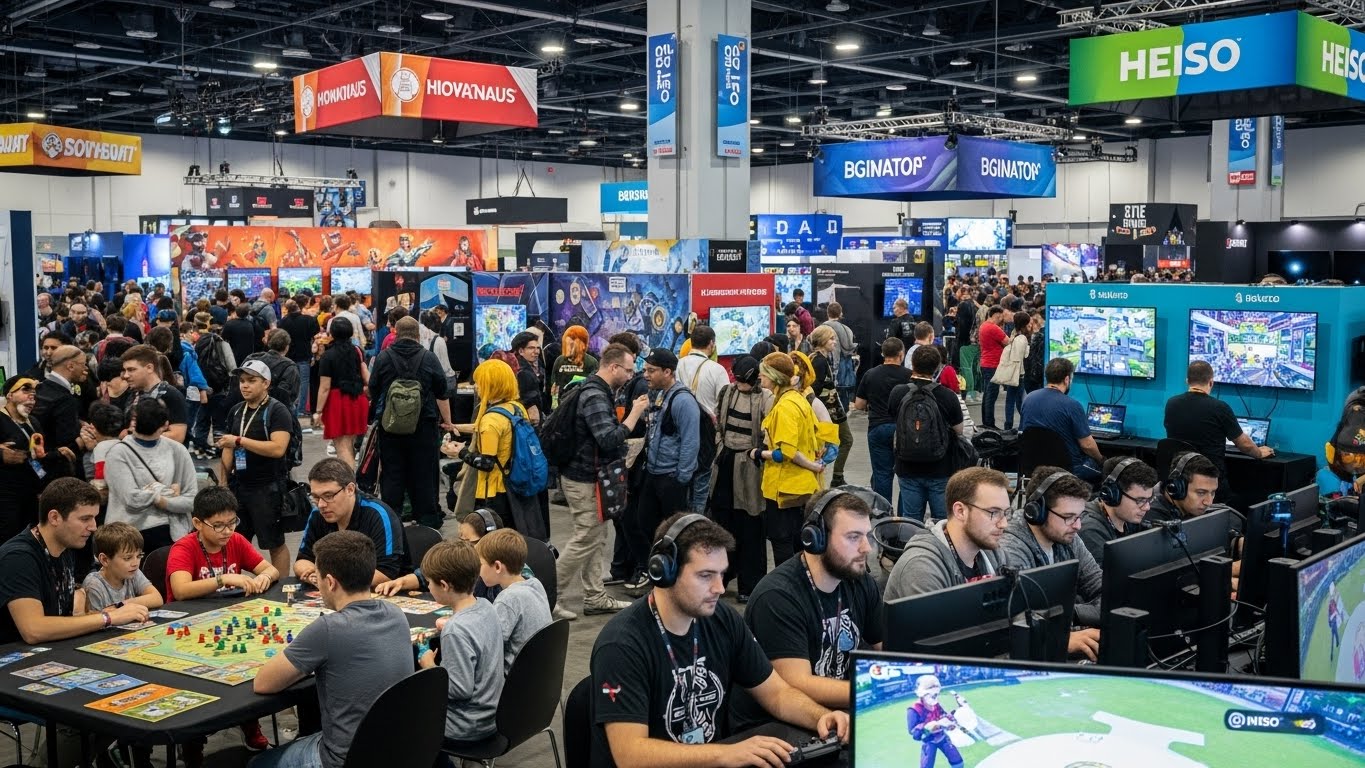
The gaming community itself is also evolving. With the rise of platforms like Twitch and YouTube Gaming, streaming has become an integral part of gaming culture. Players can not only participate in games but also watch others play, share tips, and engage with content creators. Esports has emerged as a competitive and lucrative industry, with professional players and teams competing in tournaments that attract millions of viewers globally.
In addition, the rise of indie games has added a new dimension to the gaming industry, with smaller developers creating unique, innovative experiences that challenge traditional gaming conventions.
Conclusion
From the humble beginnings of Pong to the immersive virtual worlds of today, gaming has undergone an incredible transformation. Technological advances, the rise of online and multiplayer experiences, and the evolution of gameplay mechanics have shaped the gaming industry into what it is today—a global entertainment powerhouse. With new innovations on the horizon, the future of gaming is bright, offering endless opportunities for both players and developers to explore new frontiers in interactive entertainment. Whether through