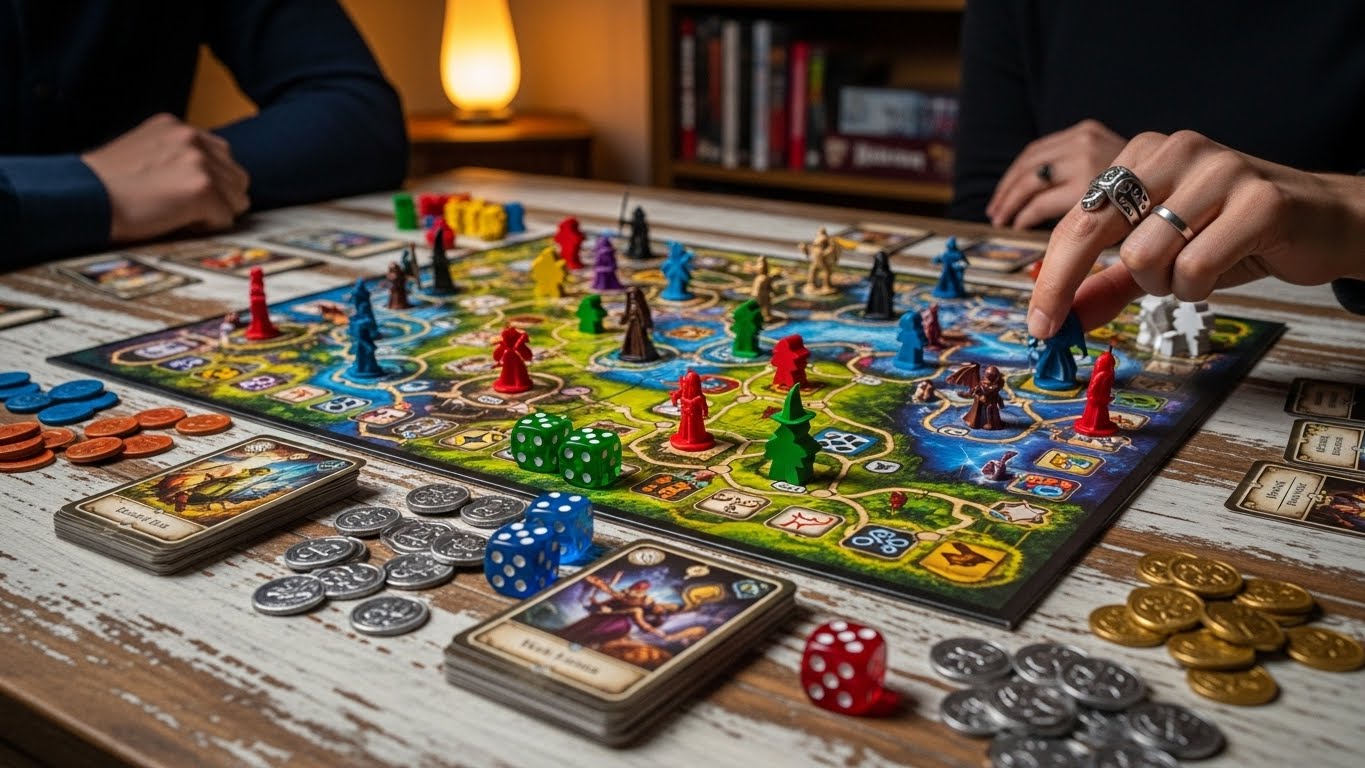


In a world where video games are becoming an increasingly significant part of entertainment, it’s easy for titles to blur together into one indistinguishable mass of combat, exploration, and simulation. However, among this vast ocean of games, some titles stand out due to their sheer creativity, distinctive approach, and unforgettable charm. These games not only push the boundaries of gameplay but also redefine the way we experience and interact with digital worlds. Today, we will take a deep dive into a select few games with unique titles that capture the imagination, break conventional molds, and offer something new for players.
The Importance of a Game’s Title
Before we get into the specifics of individual games, it’s important to understand why a unique title matters in the gaming world. The title of a game can serve as the first impression of what players can expect. It can evoke emotions, spark curiosity, or even establish a tone that carries throughout the entire gaming experience. A well-chosen title can set the stage for innovation, promise deep storytelling, or hint at gameplay mechanics that challenge expectations.
In an era dominated by sequels and franchises, a creative, one-of-a-kind title can make a game stand out from the crowd. Not only does it attract attention, but it also serves as a reflection of the creativity and vision of the developers. Let’s explore some of the most unique game titles that have left an indelible mark on the gaming industry.
1. Journey: A Masterpiece in Minimalism
When it comes to unique titles, Journey is a game that perfectly exemplifies the power of simplicity. Developed by Thatgamecompany, this 2012 release takes players on an emotional adventure through a vast, barren desert. The title “Journey” reflects the essence of the game itself — a solitary, introspective trek toward an unknown goal. Players control a robed figure on a quest to reach the top of a distant mountain, with no verbal dialogue and minimal exposition. The game’s title could not be more fitting; it mirrors both the gameplay experience and the emotional journey the player embarks upon.
What sets Journey apart is its ability to evoke profound feelings through stunning visuals, a hauntingly beautiful soundtrack, and gameplay that focuses on exploration, connection, and discovery rather than traditional conflict or combat. The title’s simplicity is reflected in its elegant and minimalistic design, but don’t be fooled — the game is anything but shallow. In fact, Journey has been lauded for its ability to stir emotions without uttering a single word.
2. Gris: A Fluid Tale of Recovery
Another standout game with a remarkable title is Gris, developed by Nomada Studio and published by Devolver Digital. Released in 2018, Gris is a visually captivating platformer that follows the story of a young girl named Gris, who is navigating a world of sorrow. The title itself is a nod to the main character’s emotional journey, with the word “gris” meaning “gray” in French. The world around Gris starts off monochromatic, representing her emotional state, and as she progresses through the game, vibrant colors slowly return, symbolizing healing and growth.
The unique part about Gris is not just its title, but also the storytelling technique. There are no traditional mechanics such as combat or dialogue. Instead, Gris’ journey through various beautifully designed environments becomes a metaphor for overcoming trauma and regaining hope. The title reflects this powerful journey of emotional and psychological healing, transforming the player’s experience into something far more personal and introspective.
3. What Remains of Edith Finch: An Exploration of Family and Loss
What Remains of Edith Finch, developed by Giant Sparrow, is a title that immediately piques curiosity. Released in 2017, this first-person narrative exploration game revolves around Edith Finch, the last surviving member of a family plagued by a strange and tragic curse. The title is a fitting introduction to the game’s central theme: the remnants of a family’s legacy and the stories of their untimely deaths.
The game consists of a series of short stories, each focusing on different members of the Finch family. As Edith explores her family’s abandoned home, she uncovers secrets and relives the moments leading to their untimely demise. The title suggests the idea of loss and the pieces of the past that remain, making players question how memory and tragedy shape the lives of the living. It’s a melancholic, yet hauntingly beautiful experience, with a unique approach to storytelling.
What Remains of Edith Finch challenges the conventional narrative structure, offering short, emotionally potent vignettes that players experience through various gameplay styles. The title encapsulates the very essence of the game: a collection of fragmented stories that paint a complex picture of family, fate, and the passing of time.
4. Dead Cells: A Rogue-like Revolution
For fans of fast-paced action, Dead Cells offers a unique twist on the rogue-like and Metroidvania genres. Released in 2018 by Motion Twin, this game brings together elements of exploration, action, and intense combat into a procedurally generated world full of enemies and traps. The title Dead Cells itself is an intriguing one, with “dead” representing the constant deaths players experience throughout the game, and “cells” referencing both the idea of the player being a part of a living organism and the metaphorical prison in which the player finds themselves trapped.
What makes Dead Cells unique is its innovative approach to the rogue-like genre. Every death is not a setback, but an opportunity to learn, evolve, and improve. The title reflects this cyclical nature of the game, where death is not the end but a continuation of the journey. In a way, Dead Cells challenges the player’s perception of failure, turning it into a stepping stone toward mastery. The game’s title cleverly mirrors the internal themes of perseverance, transformation, and the constant evolution of both the player and the protagonist.
5. The Stanley Parable: A Game of Choice and Consequences
Released in 2013, The Stanley Parable is a meta-narrative experience that subverts traditional game mechanics by challenging the concept of free will in gaming. Developed by Galactic Cafe, the game begins with the player controlling Stanley, an office worker who discovers that all his colleagues have mysteriously vanished. The title is ironic in its simplicity — Stanley’s life is mundane, yet within the game, every action the player takes is scrutinized and questioned by a narrator, who constantly offers commentary on the player’s choices.
What makes The Stanley Parable particularly intriguing is its non-linear structure, where players can choose to follow the narrator’s instructions or rebel against them, each decision leading to different outcomes. The title encapsulates the game’s central theme: the illusion of choice in video games and the consequences of those choices. It’s a clever, thought-provoking game that turns the player into both a participant and an observer, forcing them to reflect on the very nature of video game design and storytelling.
6. Papers, Please: A Dystopian Simulation of Morality
In Papers, Please, developed by Lucas Pope, players take on the role of a border crossing immigration officer in the fictional, dystopian Eastern Bloc country of Arstotzka. The title is simple, yet it conveys the mundane and bureaucratic nature of the game. However, the simplicity belies the complexity of the moral decisions the player must make throughout their journey.
Set in a totalitarian regime, players are tasked with processing citizens, checking their papers for discrepancies, and deciding who can cross the border and who must be turned away. As the game progresses, moral dilemmas arise that force players to balance their duties with personal values. The title Papers, Please highlights the central theme of bureaucracy and the personal consequences of routine decisions. It’s a strikingly thought-provoking game that makes players question the role of authority, personal responsibility, and the human cost of following rules.
7. The Talos Principle: A Puzzle-Driven Exploration of Humanity
Another game with a unique title is The Talos Principle, developed by Croteam. Released in 2014, this philosophical puzzle game combines elements of traditional puzzle-solving with deep existential questions about the nature of consciousness and what it means to be human. The title “Talos” refers to a figure from Greek mythology — a giant automaton made of brass, which is central to the game’s themes of artificial intelligence and human identity.
In The Talos Principle, players control a robot named Talos, who must solve puzzles across a series of beautifully designed environments. Along the way, players are guided by a voice that raises questions about the nature of existence, morality, and free will. The game’s title encapsulates its central question: Are we, as humans, any different from artificial beings that are programmed to think and act? The game combines challenging puzzles with a deep narrative, and the title serves as a reminder of the underlying philosophical exploration that permeates the entire experience.
Conclusion: The Power of Unique Game Titles
The titles of video games are more than just labels; they are integral to the player’s experience. A unique title can reflect the game’s themes, set the tone for the journey ahead, or hint at the innovative mechanics that make the game stand out. Games like Journey, Gris, What Remains of Edith Finch, and The Stanley Parable showcase the creative potential of game titles, demonstrating how a simple phrase can convey complex emotional, philosophical, and narrative ideas.
In an industry often saturated with sequels and franchises, these games with unique titles remind us that innovation is not just found in the gameplay itself, but in the very words that introduce us to their worlds. A game’s title can be the key to unlocking a fresh perspective, and in these cases, it is a portal