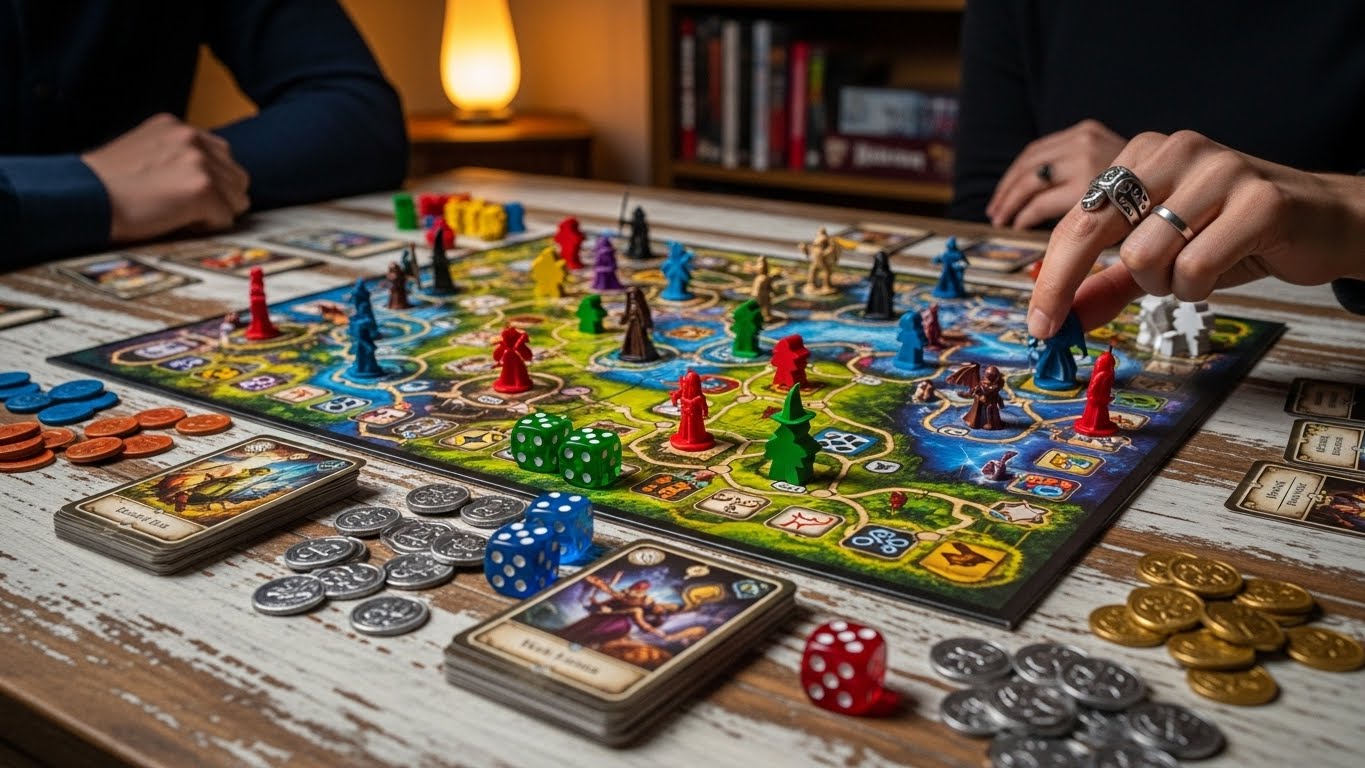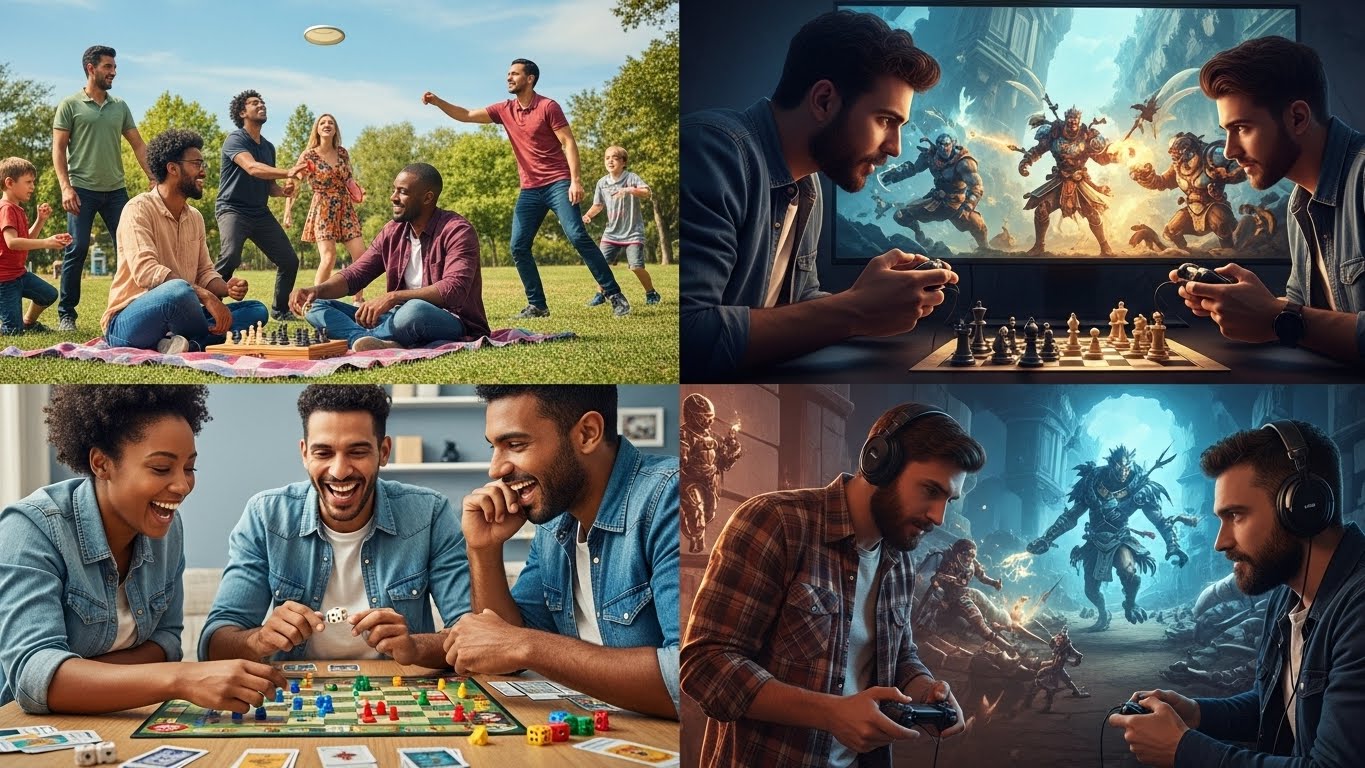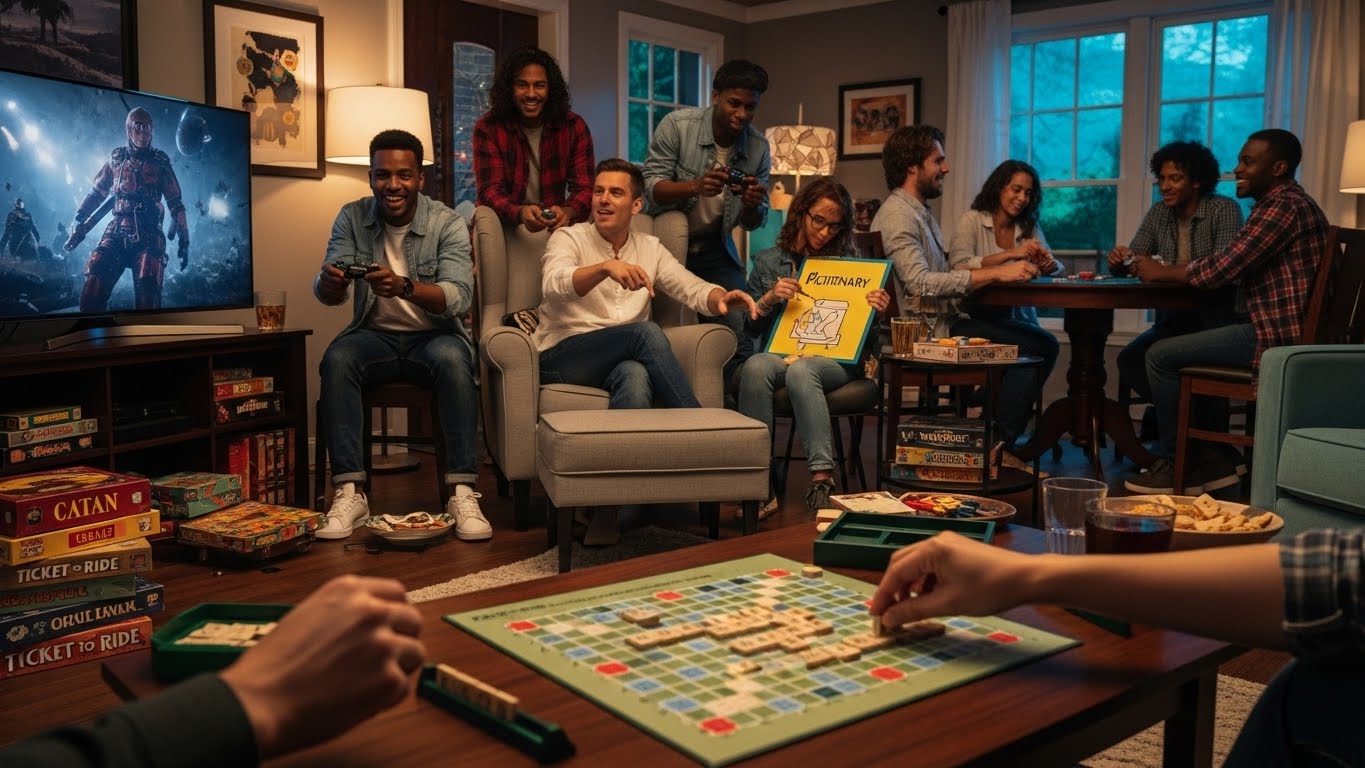

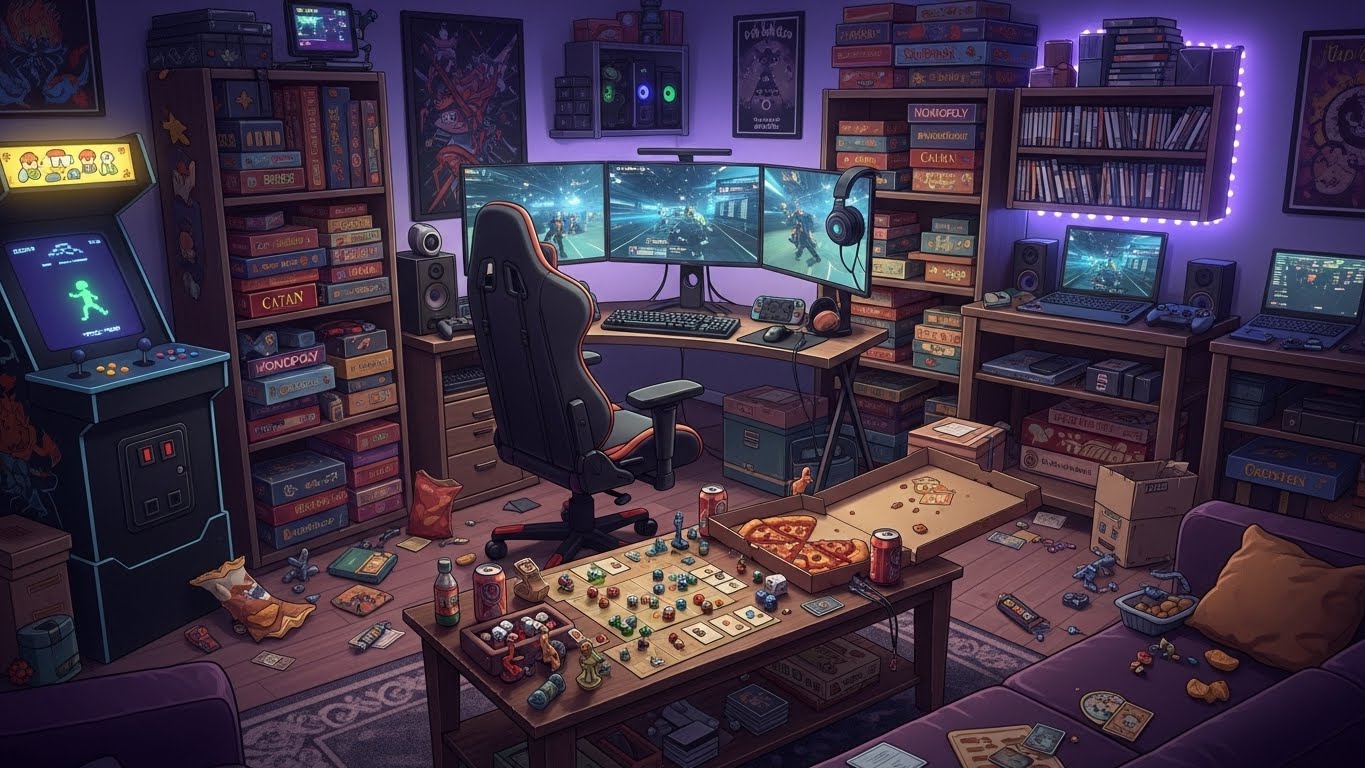
In a world that constantly evolves with new technologies, the realm of gaming has expanded far beyond its original concept of simple pixelated screens and rudimentary plots. Today, games have become an integral part of modern culture, shaping how we entertain ourselves, socialize, and even learn. From intricate storytelling and cutting-edge graphics to virtual realities that offer immersive experiences, gaming has become a multi-billion-dollar industry that continues to grow at an astonishing rate. In this blog post, we’ll explore the different types of games, their evolution over time, the impact they have on culture and society, and what the future holds for the gaming world.
The Evolution of Games: From Arcade to VR
The Birth of Video Games
The journey of video games begins in the early 1970s, when the first video game, Pong, was released by Atari. Simple and easy to understand, Pong was essentially a digital version of ping-pong, with players controlling paddles to hit a ball back and forth. Though basic by today’s standards, this game laid the foundation for the video game industry and sparked a new form of entertainment.
The following decades saw the rapid expansion of the gaming industry, with the introduction of arcade machines, home consoles, and personal computers. Games like Space Invaders and Pac-Man revolutionized the arcade scene, attracting crowds to neon-lit game rooms. These games were simple yet addictive, offering players a competitive challenge and an immersive experience that hadn’t been seen before.
The Rise of Consoles and PC Gaming
By the 1980s, video gaming had shifted into living rooms. The introduction of home consoles such as the Nintendo Entertainment System (NES) and Sega Genesis brought video games to a broader audience. The graphical capabilities of these systems allowed for more complex games with engaging storylines and improved graphics. Classic games like Super Mario Bros., The Legend of Zelda, and Sonic the Hedgehog became household names and established gaming as a mainstream form of entertainment.
The PC gaming market also grew in parallel with the rise of consoles. As personal computers became more powerful, titles like Doom, Warcraft, and The Sims emerged, offering a different kind of gaming experience. PC gaming allowed for more complex games that required higher computing power and could support multiplayer experiences through the internet, thus giving birth to the online gaming community.
Entering the World of 3D and Virtual Reality
Fast forward to the late 1990s and early 2000s, the gaming industry entered a new era with the introduction of 3D graphics. Games like Super Mario 64, Final Fantasy VII, and The Legend of Zelda: Ocarina of Time not only featured expansive worlds but also used sophisticated 3D environments that made the games feel more dynamic and interactive. These advancements pushed the boundaries of what gaming could achieve, making the player feel more immersed in the game’s world.
The next frontier of gaming came in the 2010s, with the development of virtual reality (VR). VR headsets such as the Oculus Rift and PlayStation VR offered players a chance to step into the game world in a way that was previously unimaginable. With VR, players could now experience 360-degree views, interact with the game world using their hands, and even move around within the virtual space. Though still in its early stages, VR gaming has paved the way for an entirely new dimension of interactive entertainment.
Types of Games: Exploring Different Genres
Action Games
One of the most popular categories in the gaming world, action games are all about fast-paced gameplay and physical challenges. Whether it’s combat, platforming, or exploration, action games are designed to keep players on the edge of their seats. Classic action games like Super Mario Bros. and Street Fighter defined the genre, while newer titles such as God of War and The Legend of Zelda: Breath of the Wild have elevated it to new heights.
Action games often require quick reflexes, strategy, and the ability to make split-second decisions. They may feature single-player campaigns or multiplayer modes where players compete against each other.
Role-Playing Games (RPGs)
Role-playing games, or RPGs, allow players to assume the roles of fictional characters within a narrative-driven world. RPGs are known for their immersive storytelling, character development, and expansive worlds. The Elder Scrolls V: Skyrim, Final Fantasy, and The Witcher series are just a few examples of successful RPG franchises.
One of the defining features of RPGs is the ability to customize characters and influence the storyline. Players often complete quests, level up their characters, and interact with other characters, which can alter the direction of the game’s plot.
Simulation Games
Simulation games focus on recreating real-life experiences or processes. From farming simulations like Stardew Valley to city-building games like SimCity and The Sims, these games allow players to build, manage, and interact with a virtual world. The appeal of simulation games lies in their ability to mimic reality and give players control over situations and environments that they wouldn’t typically experience in real life.
Simulation games have evolved over time to include more complex systems and deeper mechanics. For instance, Microsoft Flight Simulator offers an incredibly realistic flying experience, while SimCity has morphed into more expansive city-management games like Cities: Skylines.
Strategy Games
Strategy games emphasize careful planning and decision-making. Players must manage resources, position units, and anticipate enemy moves to succeed. Whether real-time strategy (RTS) or turn-based, strategy games require both tactical and strategic thinking. Popular examples include Age of Empires, Starcraft, and Civilization.
These games often feature multiplayer modes, where players can compete or cooperate in building empires, waging wars, or conquering territories. The key to success in strategy games lies in anticipating and outthinking opponents, making them popular among players who enjoy intellectual challenges.
Sports and Racing Games
Sports and racing games simulate real-world sports such as football, basketball, and soccer, or high-speed racing experiences. Titles like FIFA, NBA 2K, Gran Turismo, and Forza Horizon allow players to experience the excitement and competition of sports in a digital format. These games often have realistic graphics and physics that replicate real-life movements and strategies.
Sports games have become more complex with the inclusion of detailed player statistics, career modes, and online multiplayer features. Many games now feature eSports tournaments, where players compete for large cash prizes.
Puzzle and Adventure Games
Puzzle games are designed to challenge the mind, often requiring problem-solving and critical thinking. Tetris, Candy Crush, and Portal are famous puzzle games that have captivated players with their simple yet addictive mechanics. These games can be both relaxing and mentally stimulating, making them accessible to all types of gamers.
Adventure games, on the other hand, are typically narrative-driven, often involving exploration and puzzle-solving. Iconic adventure games like The Legend of Zelda series, Monkey Island, and Uncharted have left their mark on the genre, combining thrilling action with intricate storytelling and immersive environments.
The Impact of Games on Society and Culture
Gaming and Social Interaction
One of the most significant changes brought about by the rise of online gaming is the shift toward social interaction in the virtual world. Multiplayer online games like World of Warcraft, Fortnite, and League of Legends allow players to connect with others across the globe. The ability to team up with friends or compete against strangers has made gaming a social activity that transcends geographical boundaries.
In recent years, gaming communities have blossomed, with platforms like Twitch and YouTube providing spaces for gamers to showcase their skills, share tips, and engage with their audiences. This level of social interaction has transformed gaming from a solitary activity into a communal experience, where players can form friendships, compete, and even build careers as professional gamers or streamers.
Gaming as a Form of Storytelling
Video games have become an increasingly important medium for storytelling. Unlike movies or books, games allow players to shape the narrative through their choices and actions. Games like The Last of Us, Red Dead Redemption 2, and Mass Effect have been praised for their deep storylines, memorable characters, and emotional engagement.
Interactive storytelling has allowed game developers to push the boundaries of narrative, with players often facing moral dilemmas and making decisions that impact the outcome of the story. This level of interactivity has made video games a powerful form of storytelling, offering experiences that are both engaging and thought-provoking.
Education and Learning Through Games
Games have also found their place in education, with many educators using them as teaching tools. Games like Minecraft have been employed to teach everything from history and geography to engineering and mathematics. Educational games provide a hands-on learning experience that is both fun and informative.
In addition, serious games designed for training and skill development have been used in fields such as medicine, military training, and business. These games simulate real-world scenarios, allowing users to practice and refine their skills in a risk-free environment.
The Future of Games: What’s Next?
The future of gaming is bright, with new technologies continuing to shape the industry. Virtual reality (VR) and augmented reality (AR) are expected to play a bigger role, offering even more immersive experiences. The rise of cloud gaming also means that players will soon be able to play high-quality games without the need for expensive hardware, as games are streamed directly to devices via the internet.
Furthermore, advancements in artificial intelligence (AI) will likely lead to more responsive and intelligent non-player characters (NPCs) and more personalized gaming experiences. We may also see the continued growth of gaming communities, as social features become more deeply integrated into the gaming experience.